


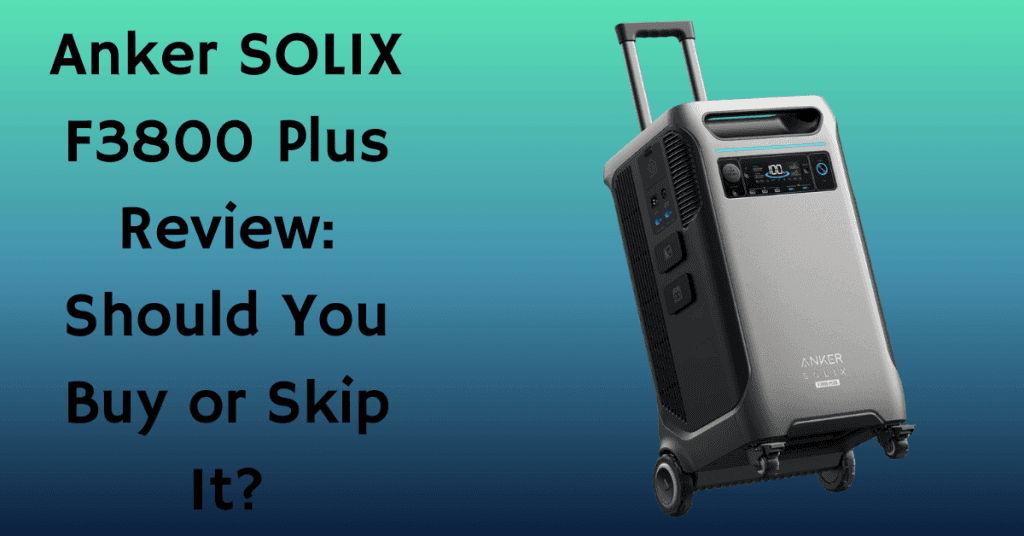
Anker SOLIX F3800 Plus performs well when you need real 240V power for a home-style backup setup and strong solar input for faster recharging—just plan.
It weighs a lot, and it follows a few charging and outlet rules that can change how you use 120V and 240V power.
What I look for first (so I don’t waste money)
Before I spend money on a 240V power station like the Anker SOLIX F3800 Plus, I check three things right away: can it run 240V loads, can it recharge quickly from enough solar, and can it stay efficient while in standby?
On the spec sheet, the F3800 Plus meets those needs with 6,000W total AC output (including a 120V/240V option), a 3,840Wh LiFePO4 (LFP) battery, and up to 3,200W of solar input across two ports (each 11–165V, up to 1,600W). Anker also lists a 5-year warranty, which helps set expectations for long-term use.
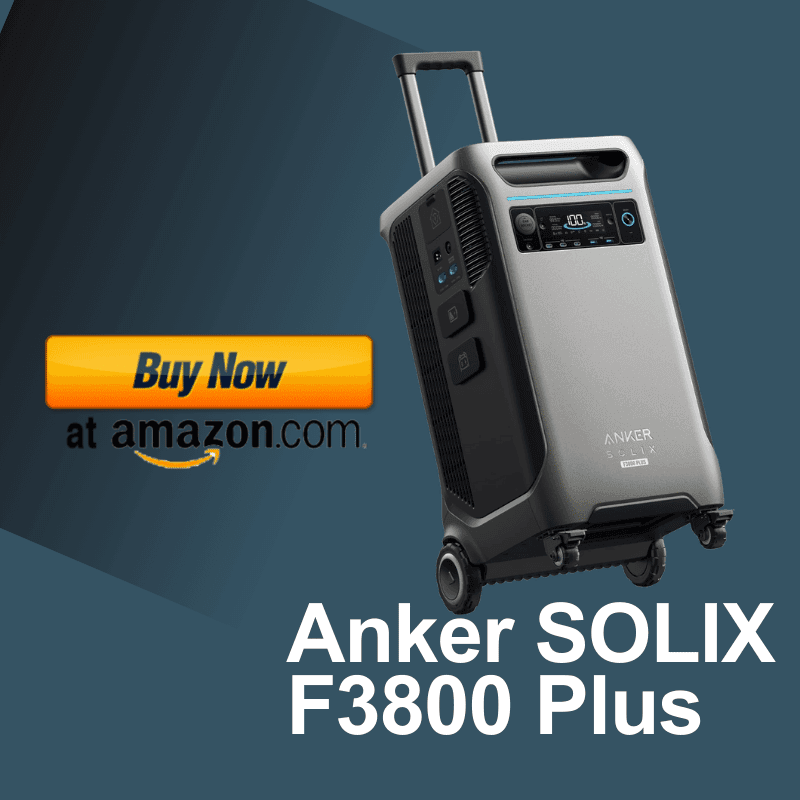
My two real-life scenarios (USA-focused, but not overdone)
When I storm season, I run the Anker SOLIX F3800 Plus like a genuine home backup battery. I keep a short list of 120V must-runs—my fridge, Wi-Fi router, and a few lights—then I reserve a clean 240V path for a transfer-switch setup or for select heavy loads.
In most US homes, split-phase 120/240V wiring makes this approach practical, and the F3800 Plus supports a 120V/240V NEMA L14-30R outlet up to 6,000W, so I can align my setup with typical US circuits. I also follow safe wiring practices: I use a proper inlet box or transfer switch, and I pay attention to neutral and ground requirements when working with 240V connections.
For solar, I plan for distance. When I run panels from the yard to the garage, long cables waste power as heat, so I push higher voltage by wiring panels in series. The F3800 Plus accepts 11–165V solar input, which helps me use standard panel strings and reduce loss on longer runs. I stay under the 165V limit because exceeding it can damage the unit, and I treat that number as a hard safety limit when designing the string.
Key technical points (simple)
The key specs that shape how you’ll use the Anker SOLIX F3800 Plus day to day. It packs a 3,840Wh LFP (LiFePO4) battery with 3,000+ cycle life, delivers up to 6,000W of AC output, and supports a 120/240V L14-30R port rated up to 25A.
For solar charging, it accepts up to 3,200W total, with two solar inputs that each handle 11–165V, 17A, and up to 1,600W. Keep the weight in mind, too—at about 136.7 lb (62 kg), you should choose a dedicated spot for it and treat it more like a home backup unit than a grab-and-go power station.
Charging rules you must know (this is where people get confused)
The Anker SOLIX F3800 Plus follows a few charging rules that can change how you use its outlets. When you charge from the 120V AC input, treat it like a UPS setup. You power devices from the supported 120V UPS outlets, but you do not use the 240V outlet in that same setup.
If you need faster refills, you can charge through a 240V generator input adapter. One F3800 Plus can recharge at up to 3,300W from a 240V source. If you add expansion batteries, it can push recharge power up to 6,000W, which helps during extended outages.
One more rule matters for EV use. When you switch to EV charging mode, the unit stops AC recharging at the same time. Plan that mode before you start an EV top-up.
Quick checklist:
- Charge on 120V AC: run only supported 120V UPS outlets.
- Need a fast refill? Use a 240V generator charger (up to 3,300W, or up to 6,000W with expansions).
- EV charging mode: don’t expect AC recharge at the same time.
Standby drain and firmware (authority + data)
Early reviews focused heavily on the standby drain of the Anker SOLIX F3800 Plus. Anker later released a firmware update that said it can cut idle use by about 50%, helping the unit last longer when it sits with AC on.A How-To Geek write-up also described the same fix after the update.
So I treat this like a must-do setup step. I open the Anker app, check the firmware, and update it on day one. That gives me the best standby behaviour before I depend on it during storms.
Simple takeaway
Update firmware first.
Then test a 24-hour “idle” run at home.
Track the battery drop in the app.
Strengths vs. weak spots (quick scan)
Strengths
Runs 120V/240V and supports up to 6,000W output for a home-style backup setup.
Accepts up to 3,200W of solar with a wide 11–165V range, making panel strings easier.
Supports 240V generator bypass charging. One unit can recharge at up to 3,300W, and with expansion batteries, it can reach up to 6,000W.
Weak spots, what I get:
- It weighs about 136.7 lb (62 kg), so you need a set spot for it.
- Charging and output follow strict rules. For example, when it recharges on 120V AC, Anker says you can use only the 120V UPS outlets.
- Some setups depend on specific ports and cables, so I keep spares in my kit.
Bottom line (answer-first)
Anker SOLIX F3800 Plus is a good choice if you want a 240V-capable home backup battery with serious solar input. It fits US backup use well, especially with a transfer switch or inlet box plan.
If you want something you can lift and move often, this is not that.
(one line) and your target word count, I’ll tighten this into a final publish-ready section that keeps the same structure and readability.
FAQs for Anker SOLIX F3800 Plus
1) Anker SOLIX F3800 Plus Review: Should You Buy or Skip It?
Buy if you need real 240V output, high solar input, and a home-backup battery you can park in one spot for outages. Skip it if you want lightweight or true grab-and-go.
2) Can the Anker SOLIX F3800 Plus run 240V appliances?
Yes. The Anker SOLIX F3800 Plus provides 120/240V power and can run many 240V loads to their limits. For home circuits, use a proper inlet box or transfer switch.
3) How fast can the Anker SOLIX F3800 Plus recharge?
It recharges from AC and solar. A 240V source can refill it much faster than a 120V source. Add expansion batteries for higher max recharge power and longer runtime.
4) Does firmware fix the standby drain on the F3800 Plus?
Firmware updates can reduce idle drain and improve AC behaviour. Update in the Anker app, then test 24 hours with AC on and no load to see the real battery drop.
5) What solar setup works best with the F3800 Plus?
Stay within the solar voltage range and avoid over-voltage. Series wiring often boosts performance on long cable runs. Each solar port can handle high watts, so plan strings accordingly.




Leave a Reply
You must be logged in to post a comment.