

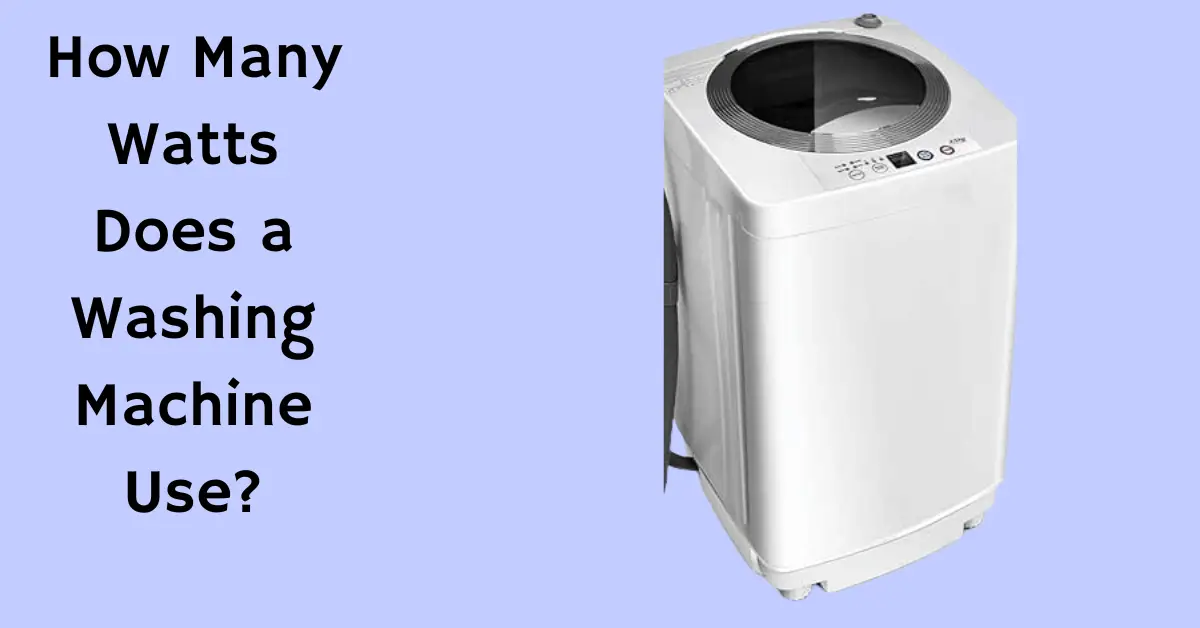

Most washing machines use about 400 to 1,400 watts while running. Many use 5 to 15 amps on a 120V outlet in the U.S. The exact number changes by cycle, load size, and washer type.
If your goal is backup power, this matters a lot. One wrong guess can trip your inverter. Or stall a small generator.
Is How Many Watts Does a Washing Machine Use Good?
Yes, the watt use is “good” for most homes.
A washer usually uses less power than a dryer. The hard part is not the average watts.
The hard part is the start-up surge when the motor kicks in.
I learned this the real way. I tested my own Maytag Bravos top-load washer during an outage plan. I wanted to know if it would run on an inverter, portable power station, or generator.
My quick real-life take
- In a humid Florida-style garage, I like a power station. It is clean. It is quiet. No fumes.
- In an icy Midwest winter outage, I trust a small dual-fuel generator more. Fuel keeps you going.
- On a dry Arizona job site, dust and heat matter. I keep gear off the ground. I watch vents and air flow.
Key tech points (simple and useful)
- Running watts = what the washer uses most of the time.
- Starting watts (surge) = the short spike when the motor starts.
- U.S. washers are often 120V, but some units may be 240V. Always check your label. (EnergySage)
- kWh per cycle tells total energy used for one load.
What could be better (honest notes)
Point 1: Surge spikes can surprise you. A small inverter may shut off when the motor starts.
Point 2: Some washers add hidden load. A built-in water heater (if your model has one) can raise watts a lot.
Point 3: Real watts change by cycle. “Bulky,” warm wash, and fast spin can pull more power than you expect.
Recommendation
If you only want to run a washer, most setups can do it.
But you must size for the surge.
Good fit: A power station or inverter that can handle the start-up surge.
Do more research: If your washer is 240V, has heat, or you also need a fridge at the same time.
Typical washing machine wattage range
Average running watts: often 400–1,400W (EnergySage)
Typical amps: 5–15 amps on 120V in many U.S. homes (EnergySage)
Running watts vs starting watts
Running watts are steady.
Starting watts are a quick jump.
Motors do that. It is normal.
What changes the watts the most?
Hot water vs internal heating element
Many U.S. washers use hot water from your water heater.
Some models also have a heater inside the washer. That can raise watts a lot.
Load size, cycle type, and spin speed
Big load = more work for the motor.
Heavy cycle = longer run.
Fast spin = higher peak draw.
My Real Test Results on a Maytag Bravos Washer
I used this test to answer one thing.
“Can I run my washer on backup power?”
Tools I used to measure power
Kill A Watt meter: This shows volts, amps, watts, and kWh for a plug-in device. (Wikipedia)
Clamp meter for inrush amps: This helps catch the short start-up surge.
What I saw during each stage
Standby watts: My washer sat near 1 watt at idle. That is just the control panel.
Fill stage: Power stayed low while it filled. The water valve does not use much.
Wash / agitate stage
Most of my wash time sat around 250–400 watts. It moved up and down as the motor changed speed.
Spin + pump stage: This is where I saw the biggest jump. At one point I saw about 847 watts during a hard spin moment.
Total energy per load
My full cycle used about 0.12 kWh total.
That is 120 watt-hours, not 120 watts.
It means the washer used 120 “watts for one hour,” spread over the whole cycle.
Your number can be higher. Warm water, big loads, and long cycles can raise it.
How to Calculate Washing Machine Watts
The simple formula
Watts = Volts × Amps
Example with a common U.S. outlet:
120V × 8A = 960W
This is a quick estimate. Real watts can vary by motor speed.
Why watts jump during motor start
Motors need a “push” to start. That push shows up as a short surge in amps.
Your inverter must survive that moment.
Can a Portable Power Station Run a Washing Machine?
Yes, many can. But you must check 3 specs.
What specs matter
Continuous watts
This must cover your running watts.
Surge watts: This must cover your motor start.
Battery capacity (Wh)
This tells how many loads you can run.
A simple way to think:
If a load is near 120Wh in your test, a 1,000Wh unit could do several loads.
But real use can be more than that.
What battery size makes sense
Small units: may run a washer, but may fail on surge.
Mid units (1–2 kWh): safer for surge and repeat loads.
Large units (2–4 kWh+): best if you also run a fridge.
Can a Generator Run a Washing Machine?
Yes. In many cases, it is the easiest path.
Minimum generator size for a washer
A small inverter generator is often smoother for motor loads.
Plan for surge. Do not size “too close.”
Fuel and run-time planning
A generator runs as long as you have fuel. That is the main win.If you live where storms hit hard, that matters. Think Gulf Coast rain, Midwest ice, or wildfire shutoffs.
Washer + Power Outage Setup Tips
Safe connection options
Use a heavy cord
Use a thick cord for high load. Thin cords can get hot.
Transfer switch
For whole-home circuits, use a transfer switch and an electrician.
It is safer than backfeeding.
Avoid these common problems
- Overloading the inverter with too many loads at once
- Using a cheap cord that heats up
- Ignoring surge watts on motor start
What Else Your Washer Needs During an Outage
Water supply and drain
City water: washer can fill as normal.
Well pump: you may also need power for the pump.
Washer + other loads
If you run a fridge at the same time, add the watts.
This is where many plans fail.
Final Verdict
A washing machine does not use “crazy” watts. Most of the time, it is a mid-load device.
For most homes:
- Pick a portable power station if you want clean, quiet power.
- Pick a generator if you want a long runtime and fast refuel.
- Best setup: both, if your budget allows.
My Recommendation
Buy with confidence if your backup power can handle surge watts and you only need the washer sometimes.
Do more research if your washer is 240V, has internal heat, or you need to run many big loads during long outages.
If you tell me your washer type (front-load, top-load, compact, HE, or washer-dryer combo) and your backup gear (inverter, power station, or generator), I can suggest a safe watt and surge target for your exact setup.





Leave a Reply
You must be logged in to post a comment.